


How teen TV is replacing repetition with authenticity: ‘a reprieve from the algorithm’
How teen TV is replacing repetition with authenticity: ‘a reprieve from the algorithm’

Emma Madden Fri, August 7, 2026 at 9:01 AM UTC
0
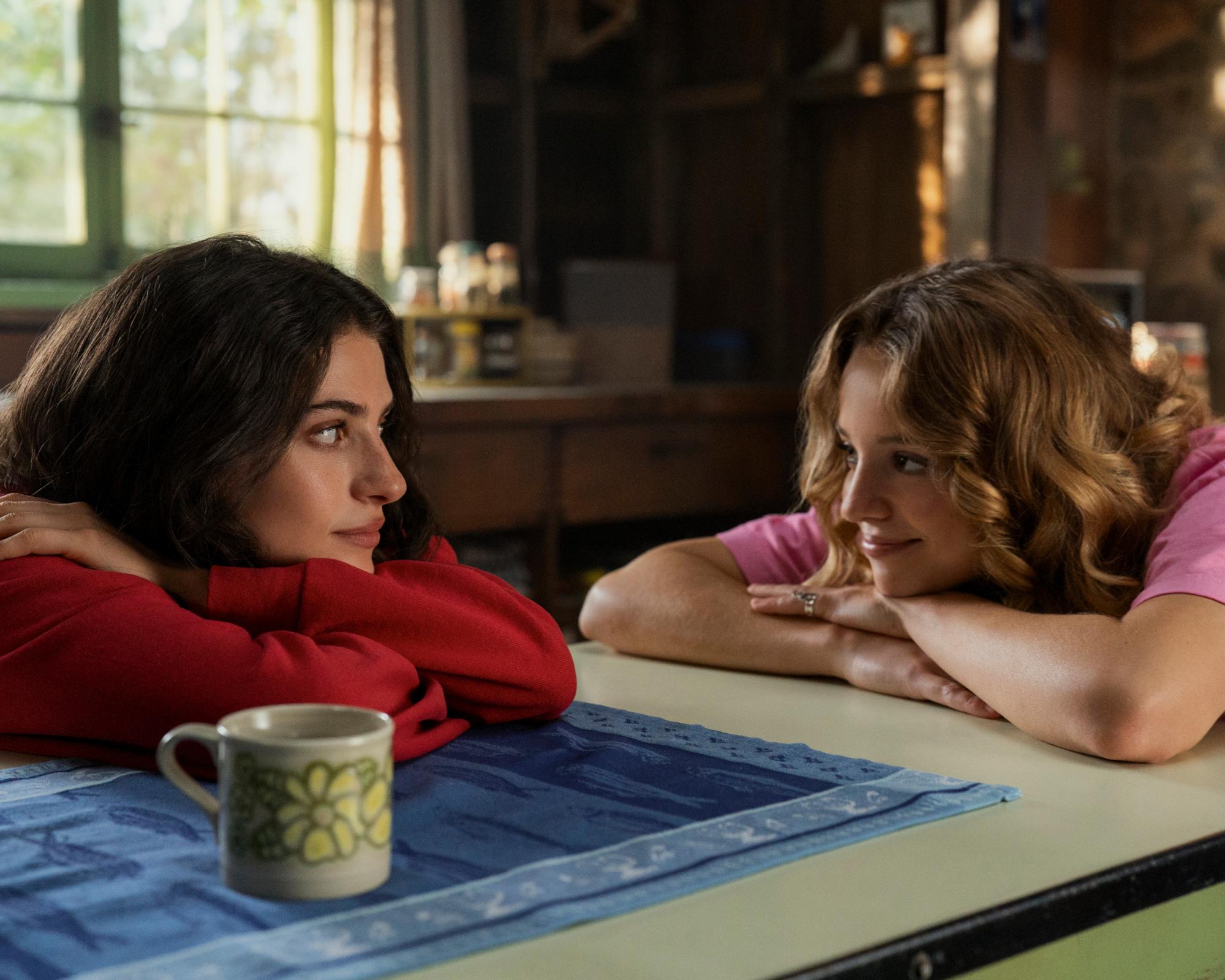
Ella Rubin and Bo Bragason in Sterling Point.Photograph: Sabrina Lantos/Courtesy of Prime
Annie Jacobson has a 10-step skincare routine, a voice-activated white noise machine, the wardrobe of a Uniqlo mom, and no desire for anything other than getting into Wharton Business School. “You’re 17. You’re acting 30,” her twin brother Connor tells her, encouraging her to spend her summer partying instead. As central characters in Prime Video’s new coming-of-age drama Sterling Point, their banter speaks to the evolution of teen drama as it was 20 years ago and how it is now: a slow creep from histrionic hedonism to buttoned-up restraint.
Watching Sterling Point, Amazon’s new series from the My Old Ass director Megan Park, you’re struck by how little it resembles adolescence as previous generations imagined it. Set over one pivotal summer on a remote Canadian island, the show follows Annie as family secrets, first love and long-buried grief unravel the meticulously ordered life she’s built. Its teen protagonists, raised in the age of therapy-speak, are emotionally articulate, relentlessly self-aware and unusually good at communicating, making for a noticeably subdued coming-of-age drama.
Related: Sterling Point review – this teen drama from Gossip Girl’s creators is brilliant escapist TV
Sterling Point is part of a genuine new wave of original teen TV. Off Campus, The Summer I Turned Pretty, Heartstopper, Maxton Hall, Forever, My Life with the Walter Boys and We Were Liars have become as reliably successful – and as capable of inspiring fan frenzy – as, say, Game of Thrones. They routinely generate fancams, playlists, shipping wars and breakout stars.
Together, these shows comprise a new wave of teen television defined by a slow indie-film pace, an anti-algorithm aesthetic, and longing as its central engine. Twenty years ago, every network wanted its The Sopranos; now everyone’s chasing its own version of Prime Video’s megahit The Summer I Turned Pretty.
Amazon is pursuing this wave with particular aggression. Off Campus swiftly became Prime’s third most watched debut series of all time after its launch this May, while June’s weepy romance series Every Year After drew 36 million viewers worldwide within its first 12 days. Sterling Point is its latest attempt to build an original teen franchise rather than revive an old one.
The rise of this new wave of TV shows feels particularly significant because they are competing with the creatorverse for viewers’ attention. According to a recent report, 43% of gen Z now prefer YouTube and TikTok to traditional television or paid streaming. But while 2010s TV megahits like Riverdale and Pretty Little Liars tried to counter online shortform content with their sticky mysteries and puzzle-box plots, this new batch skews naturalist and slow-paced. They’re no longer trying to outpace the algorithm, but offering a reprieve from it.
Related: Sex, drugs and serial killers: inside Ryan Murphy and Bret Easton Ellis’s lurid TV thriller
Advertisement
That shift comes as Hollywood’s broader nostalgia strategy continues to produce diminishing returns. The Buffy the Vampire Slayer reboot stalled. This summer’s Legally Blonde spin-off, Elle, received very mixed reviews across the board. Clueless has spent years in development (it looks like it finally has a new home, for now). The recent Malcolm in the Middle reboot relied far too heavily on nostalgia. Everyone agreed to develop collective amnesia about the Gossip Girl reboot. Legacy properties are struggling to recreate their former cultural significance, while new teen IP is having its moment. Many of these shows originate as BookTok sensations; Sterling Point doesn’t, even if it feels kindred in spirit.
Almost all of today’s defining teen dramas take place inside cloistered worlds, forcing their characters to remain on one another’s path. The Summer I Turned Pretty keeps its stock of romances confined to Cousins Beach. Off Campus keeps its rivalries and romances inside a single university and its hockey team. Maxton Hall has its elite boarding school; My Life with the Walter Boys, its family ranch. By sealing off their exits and sticking to just one or two settings, these shows make tight proximity and slow-burn tension possible.
Studios may think audiences want familiar IP. Increasingly, it seems they want familiar feelings – ones they may never have experienced themselves, or at least haven’t felt in years. They yearn to yearn.
“The huge success of The Summer I Turned Pretty is due to the fact that they did the yearning very well,” digital culture expert Ainhoa Marzol recently said. “I would even say that Heated Rivalry works very well because it tells a story that is very sustained over the years, even though it is condensed into a few episodes. The story spans 10 years. People are looking for that.”
Teen TV flourished from the late 90s through the early aughts, when aspirational teenagers populated Beverly Hills, 90210, Dawson’s Creek, One Tree Hill and Gossip Girl. But as short-form video exploded, the genre receded, with young audiences increasingly choosing the phone over the television. Which raises the question: why is the teen drama thriving again when its audience has TikTok, Reels and Subway Surfers?
Part of the answer lies in what these series refuse to do. They pull back from technology and pop-up text messages. At a moment defined by social media loneliness and atomization, they place love, sex and intimacy back within reach, creating analogue worlds built around face-to-face connection. It’s a tactic performed by teen period pieces like The Shards and The Testaments, and downplayed through the small-town locale of My Life With the Walter Boys.
The irony is that those shows are often discovered, discussed and amplified on BookTok and TikTok. That contradiction speaks to what young audiences feel they’re missing. It also helps explain why these shows resonate just as strongly with millennial women, who remember – or miss remembering – the intensity of first love. These shows have a two-pronged audience: the young and the nostalgic.
Sterling Point’s Park has spent much of her career searching for that emotional middle ground. As both an actor and film-maker, she’s spoken about her frustration with teenagers who never sounded remotely like teenagers on screen. It’s an approach that has come to define this new wave of teen television, where the clumsy transition into adulthood and the exquisitely painful crushes that puncture it, play out in realist mode. No longer are teen dramas drawing on swoony escapism, but instead doubling back to teenage life as it really is, with the clarity of television.
Sterling Point is out now on Prime Video
Source: “AOL Entertainment”
