


Inside Peter Cushing and Christopher Lee’s far from horrific friendship
Inside Peter Cushing and Christopher Lee’s far from horrific friendship

Tom FordySat, October 10, 2026 at 7:00 AM UTC
0
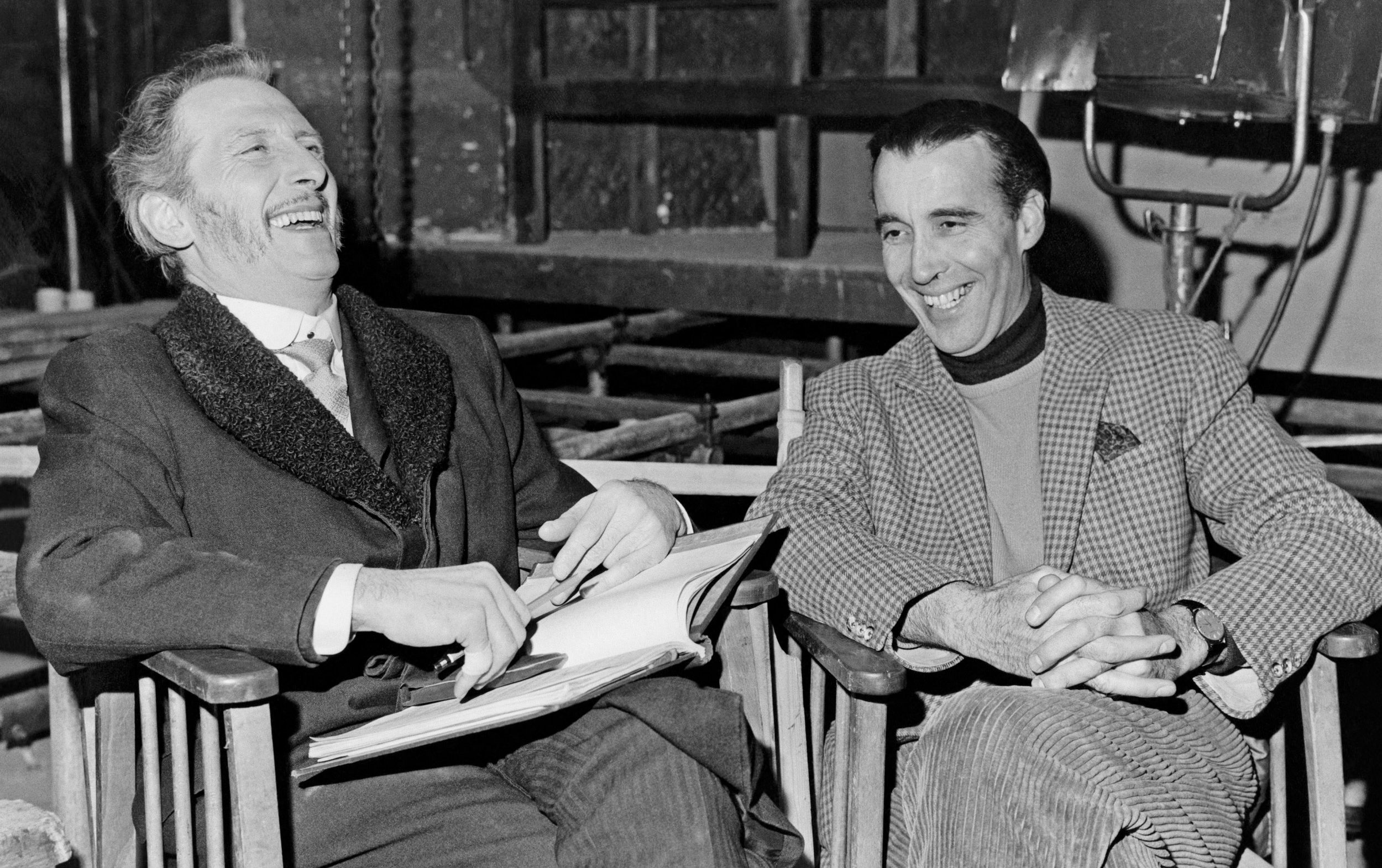
Peter Cushing and Christopher Lee on set in 1964. The duo made 22 films together - Alamy/Everett Collection IncPeter Cushing and Christopher Lee met on their first Hammer horror film together, The Curse of Frankenstein (1957). Cushing was playing the chilly, austere, sociopathic Baron Frankenstein and Lee was his tragic, lumbering Creature. Their introduction came when the Creature burst into his creator’s dressing room to complain. “I haven’t got any lines,” Lee said. Cushing looked up and quipped, quite matter-of-factly, “You’re lucky, I’ve read the script.” That was the beginning of what Lee later described as “a deep friendship”.
Peter Cushing and Christopher Lee met on their first Hammer horror film together, The Curse of Frankenstein (1957). Cushing was playing the chilly, austere, sociopathic Baron Frankenstein and Lee was his tragic, lumbering Creature. Their introduction came when the Creature burst into his creator’s dressing room to complain. “I haven’t got any lines,” Lee said. Cushing looked up and quipped, quite matter-of-factly, “You’re lucky, I’ve read the script.” That was the beginning of what Lee later described as “a deep friendship”.
Cushing and Lee became the titans of British-made Gothic horror at a time when British-made Gothic horror was the best horror in the world. And their friendship was part of the magic behind the monsters.
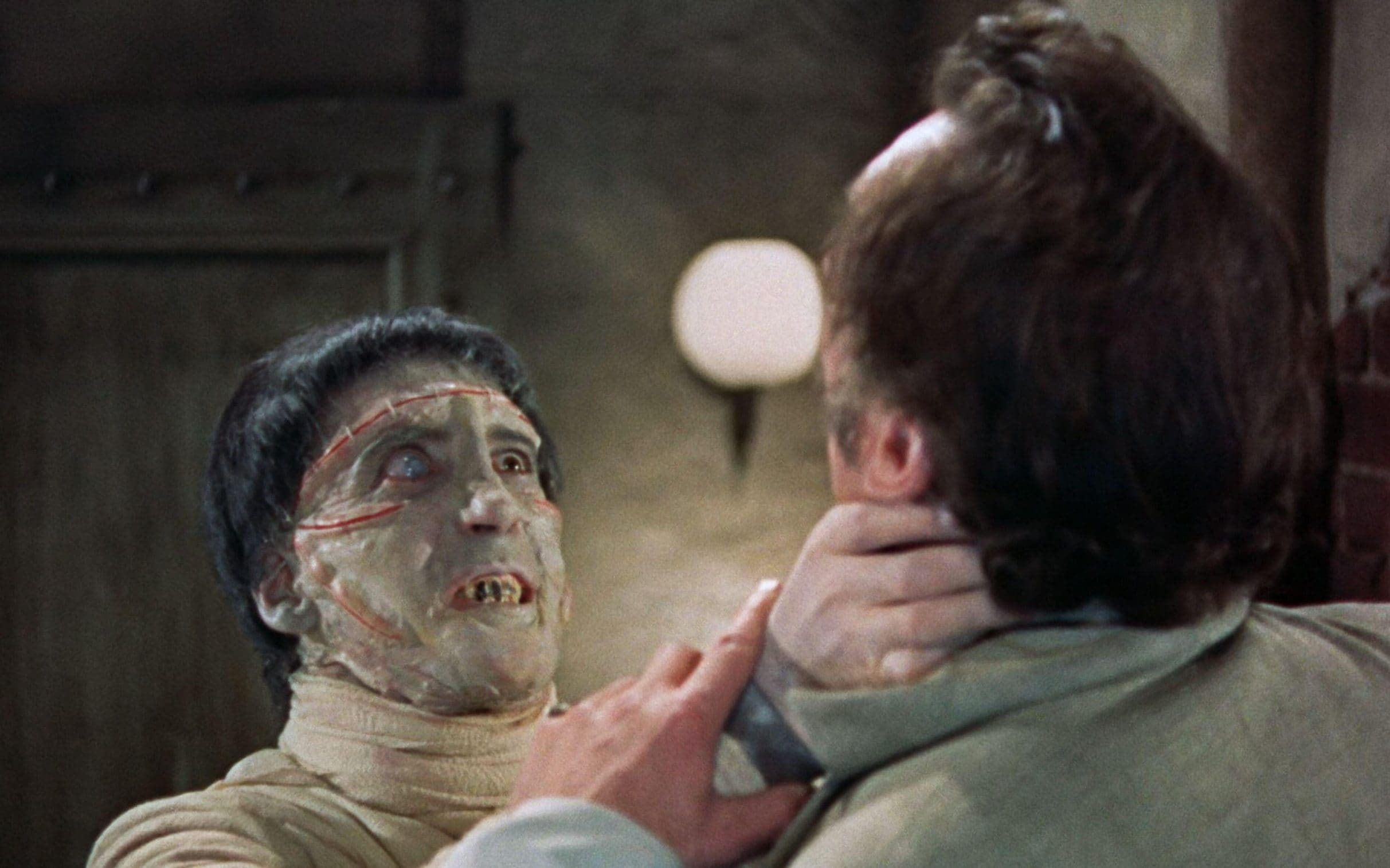
Lee’s Creature strangling Cushing’s Baron Victor Frankenstein in The Curse of Frankenstein - Alamy/Landmark media
They made 24 films together, eight of which were Hammer films – none more famous and influential than Hammer’s Dracula (1958), which returns to cinemas this month in 4K. It includes restored footage that was originally cut by British censors and thought lost for 60 years. The scenes, which survived in the Japanese theatrical version, were discovered in damaged condition in Tokyo in 2011, and have since been rediscovered in pristine condition in the Warner Bros’ vault. A 4K box set of the restored film will follow in November.
Dracula followed the dynamic set in The Curse of Frankenstein and continued in other films – including Hammer’s The Mummy (1959) and later Dracula sequels – with Cushing as the lead and Lee as the monster. In the case of Dracula, Cushing is vampire killer Van Helsing and Lee is the Count himself.
“Peter Cushing and Christopher Lee became iconic,” says Marcus Hearn, who, with Alan Barnes, co-wrote The Hammer Story. “I use the word advisedly, because they became representative of a particular kind of film and role.”
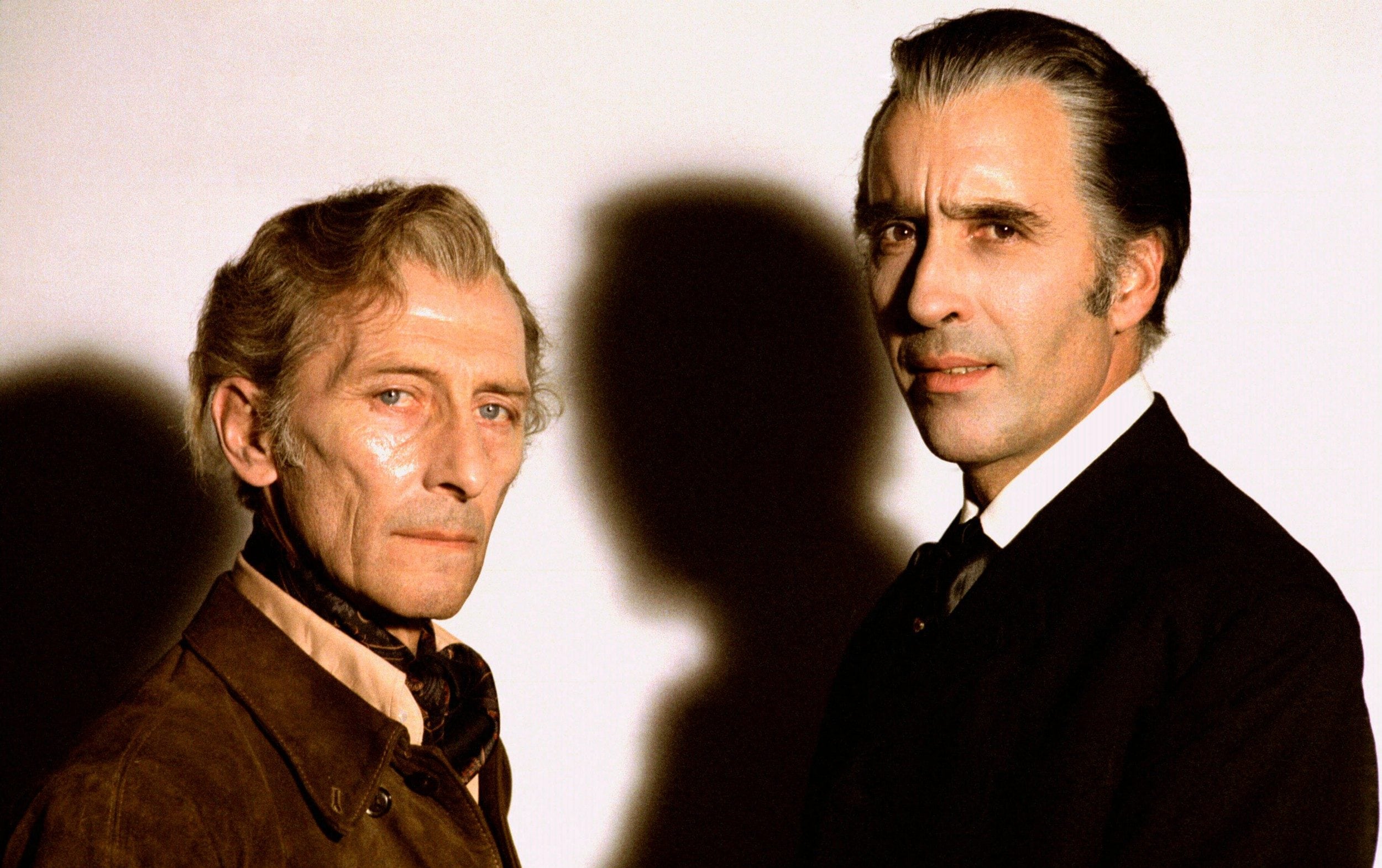
Cushing as vampire killer Van Helsing and Lee as the Count in Dracula - Everett Collection Inc/Alamy Stock Photo
The Cushing-Lee friendship has been mythologised – all part of the affection for the lurid Hammer formula of dusty castles, bloody fangs and heaving bosoms. But the stories of Cushing and Lee joshing around behind the scenes are so pure-hearted, they could surely ward off any evil.
On The Curse of Frankenstein, Lee – who was a tremendous baritone – sang opera for Cushing. And as they waited to view the daily rushes at the end of their shooting day, the duo linked arms and danced a soft-shoe shuffle – still dressed as Baron Frankenstein and the Creature – to amuse the cast and crew. Later, when Cushing was broken by grief over his wife’s death, Lee did his best to support his old friend by sending him silly postcards and doing impersonations of Looney Tunes characters down the phone.
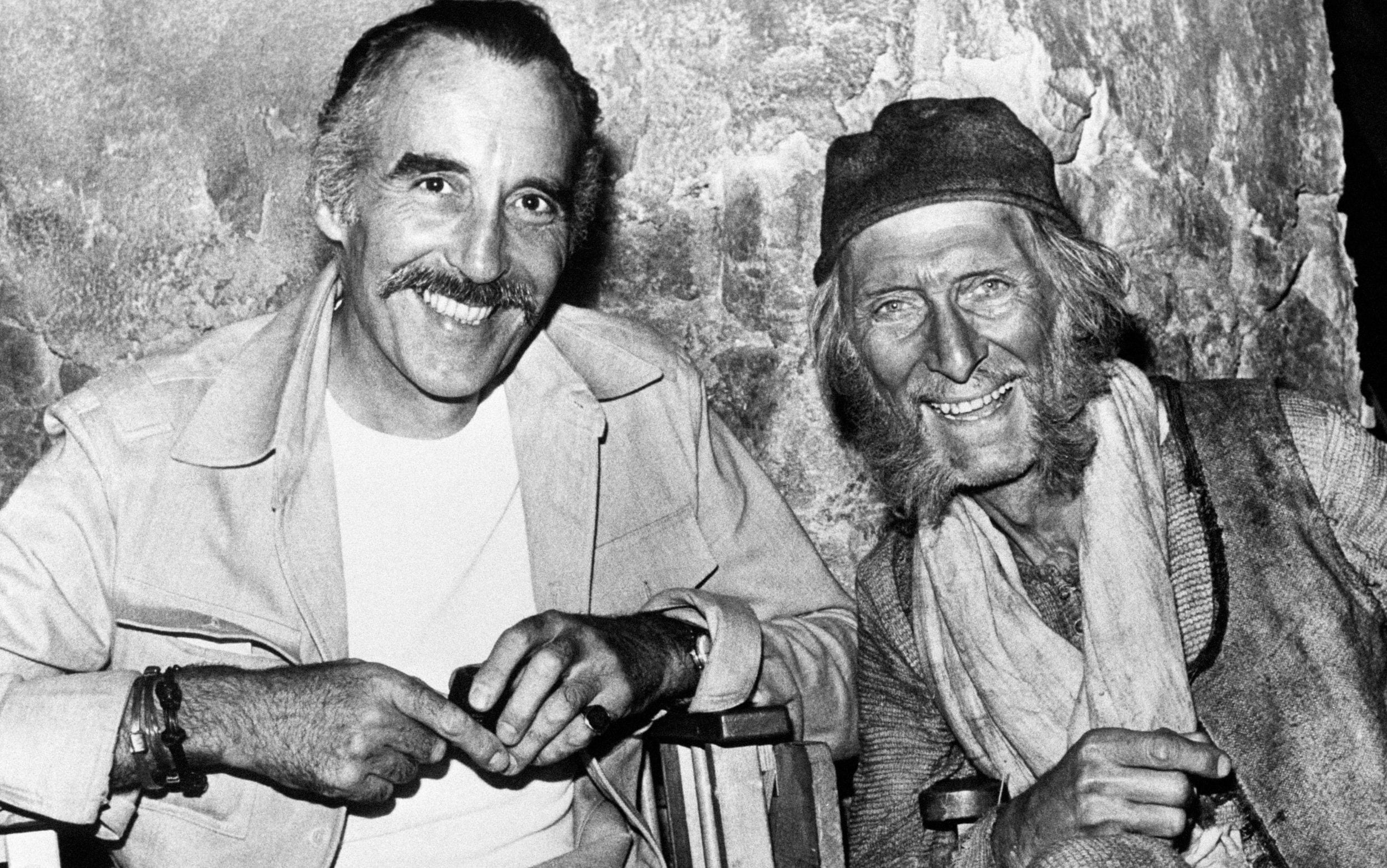
On the set of Arabian Adventure at Pinewood Studios - PA Images/Alamy Stock Photo
Cushing and Lee made so many films together that they’d co-starred in two before they even met. They both appeared in Hamlet (1948)and Moulin Rouge (1952), but never crossed paths on those productions. But before Hammer, Cushing was primarily known as a TV actor – though he had horror association for his role in the BBC’s highly controversial, terrifyingly bleak teleplay of Nineteen Eighty-Four. The Curse of Frankenstein made Cushing a film star, and Hammer’s favourite leading man. “Cushing and Hammer were made for each other,” says Hearn.
It was Dracula, however, that made Lee an international star, even though he has around just seven minutes of screen time – a testament to sheer force of Lee’s presence in the cape and fangs. “It brought me a name, a fan club and a second-hand car,” Lee wrote in his autobiography. He was paid £750.
As Hearn notes, the film was a reinvention of the Dracula story and character, adding the element of sex, which Lee personified, to the all-important Hammer formula. “The character was a sexual predator, hence casting the tall, handsome and urbane Christopher Lee,” Hearn tells me. “He’s not portraying the character as a monster – some people at the time argued that women wanted his Dracula to bite them. Lee was something of a pin-up after Dracula was released.”
For Jamie Anderson, creative director at John Gore Studios, owner of the modern-day Hammer, there’s a bond that develops between Cushing and Lee from The Curse of Frankenstein and Dracula. “I feel like you can see the mutual bond and respect grow between the two films,” says Anderson, the son of Thunderbirds creator Gerry Anderson. “These are two men that have great respect for each other in real life and hate each other on screen.”
It’s interesting to ponder why Cushing and Lee became pillars of Gothic horror. No doubt it’s a case of right actors, right films, right cultural moment, but there’s a touch of Gothic about the men, too – statuesque and foreboding. “I’ve heard the partnership described as precision and presence,” Anderson says. “Cushing’s precision, Lee’s presence. But even in their look – Cushing’s incredible face and cheekbones that bleed into that precision, and Christopher Lee being so intimidating and powerful.”
Cushing and his beloved wife, Helen, owned a house in the coastal town of Whitstable, Kent. In his autobiography, Lee recalled staying there with the couple and marvelling at Cushing’s aquarium of tropical fish. Lee also stayed with them at their house in London, where he admired Cushing’s knack for making toy soldiers and cardboard scale recreations of theatre productions. They were friends with American horror star Vincent Price, too – the trio starred in the silly-but-fun non-Hammer film, Scream and Scream Again (1970).
It’s easy to imagine that part of the reason Cushing and Lee made so many horrors was to work with each other. “Wouldn’t you?” Anderson says, laughing. “If it was your best mate and there was a way to spend time with them and get paid to do it – to have a bit of fun and probably roll your eyes at the bits you thought were less than perfect?”
Much like the monster stories, it’s easy to mythologise, of course. “A certain sentimentality has grown up around the company and the people associated with it,” says Hearn. “Yes, they were friends, but it’s a complex thing. There were certainly disparities about the way they were treated behind the scenes.”
Cushing was happy with the Hammer association, while Lee could be prickly about it. “He was not comfortable with being associated with these films, though he made a lot of them,” says Hearn, adding that Lee had “a very fractious relationship” with Hammer management.
Advertisement
“Generally speaking, Hammer loved working with Peter Cushing, and Peter Cushing was very loyal to Hammer,” Hearn says. “He’d be there if they needed him, on almost every occasion they asked. Whereas if you look at the memos in the Hammer archive, there is a deep reluctance to work with Christopher Lee.”
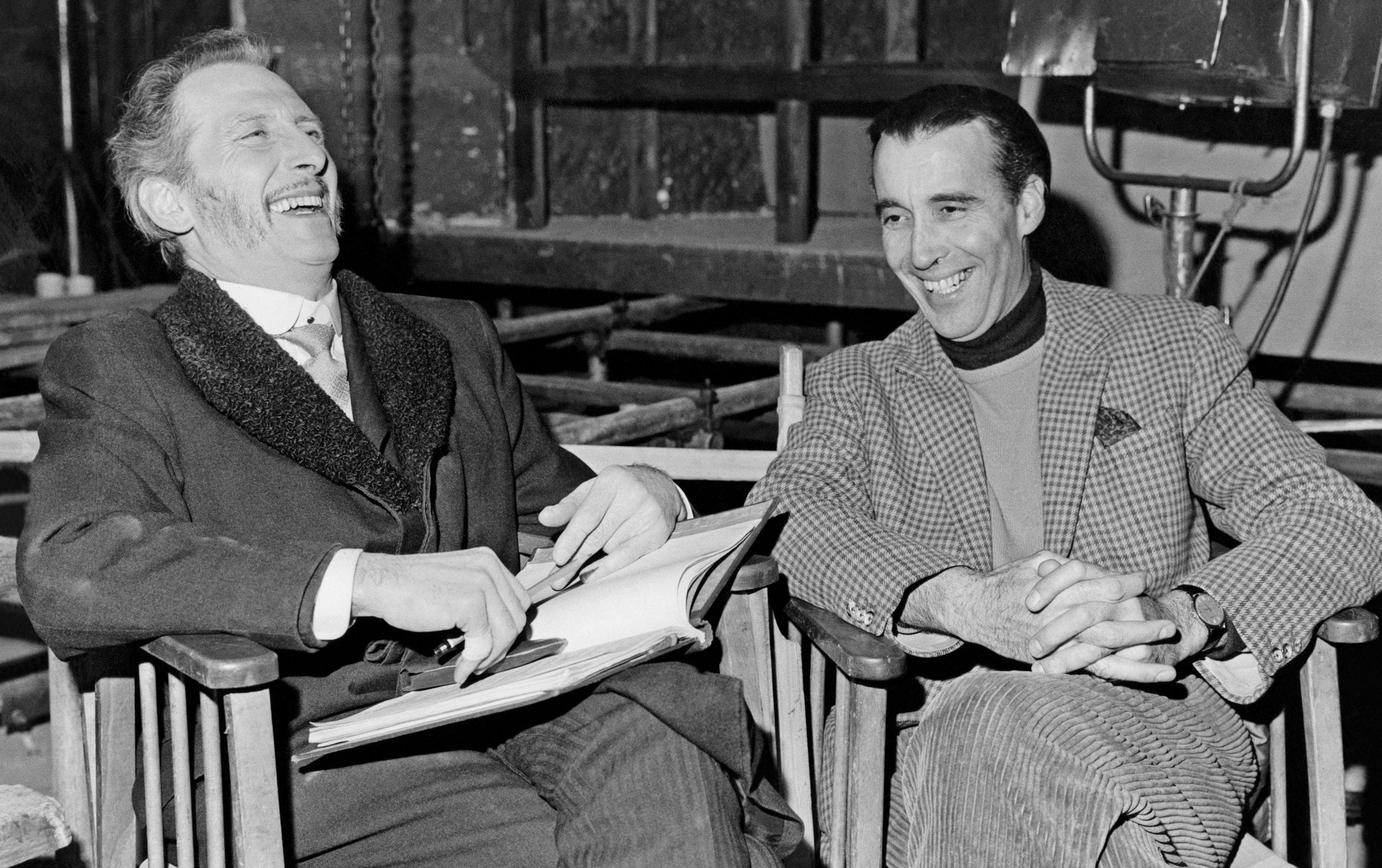
It’s easy to imagine that part of the reason Cushing and Lee made so many horrors was to work with each other - Everett Collection Inc/Alamy Stock Photo
There was also a disparity in earnings between the old friends. “Christopher Lee got a lot more money than Peter Cushing did towards the end,” Hearn says. “Peter was on pretty much the same money in the early 1970s as he was in the 1950s. But Lee’s salary was much higher.”
At one point, Hammer tried to replace Lee as Dracula with a younger, cheaper actor, but the studio’s distributors vetoed it. Hammer had to woo Lee back to the role, which he played for Hammer seven times.
“Lee gave Hammer what I would consider to be the definitive screen Dracula, and in return they made him a star,” says Hearn. “He used to say, ‘Yes they made me a star, but I more than repaid my debt to them.’”
Lee did keep a scrapbook of his work, which he showed Hearn. “He kept cuttings and photographs of his films, including the Dracula movies,” Hearn recalls. “He was very proud of the character – even though he played hardball with Hammer over playing Dracula in the later sequels.”
Lee turned to supporting Cushing when Helen died in 1971. Cushing was devastated, and tried to induce a heart attack by running up and down the stairs – a vain attempt to end his own life. Later that year, he starred with Lee in the Spanish-made Horror Express, a deliciously schlocky film about an alien-turned-prehistoric-ape-man on a train. When Cushing arrived in Spain to shoot Horror Express, he was in the throes of grief and wanted to quit the film. Lee met Cushing that night and entertained him with anecdotes, distracting his old friend enough that he persevered. The film was shot over Christmas, 1971, Cushing’s first Christmas without Helen. Lee insisted that Cushing spend Christmas Day with him, his wife and daughter.
The following year, they returned to their most famous roles, Dracula and Van Helsing, for the groovy, modern-day Dracula 1972 AD, in which Dracula haunts a stuck-in-the-swinging-Sixties Chelsea. It begins with the old foes throttling each other atop a horse-drawn carriage rattling through Hyde Park – you have to imagine it must have been a hoot for the old pals.
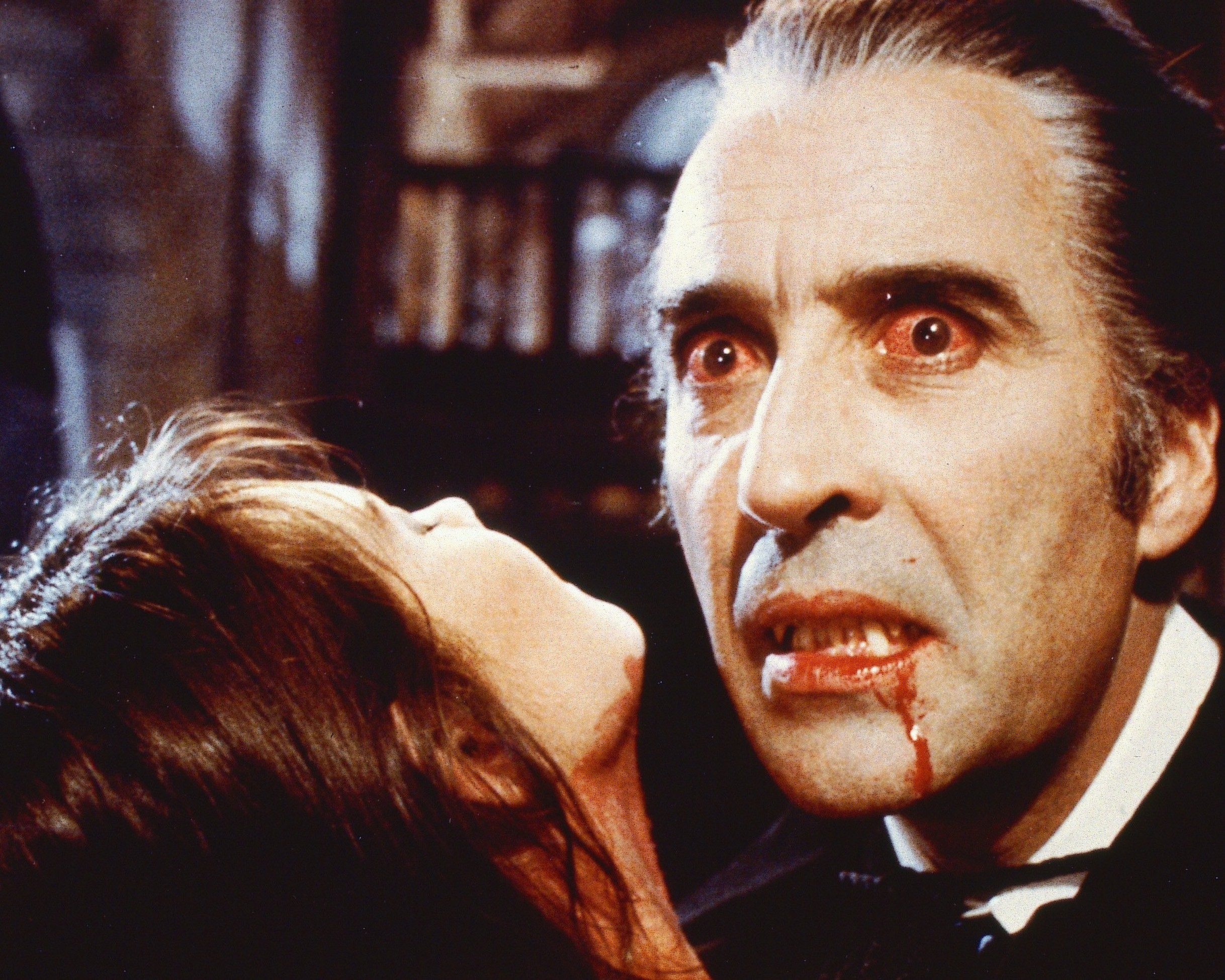
Lee (pictured) and Cushing reunited for Dracula AD 1972 - Getty/Silver Screen Collection
“I think they always had a little tongue-in-cheek-ness in their approach to the films,” Anderson says, “even though they took them very seriously and performed to their best. I’m sure those moments are the kind of things they threw themselves into as mates.”
Cushing had noticeably aged by that point, and never truly recovered from the death of his wife. “It had a terrible effect on him,” Hearn says. “If you look at the letters he wrote to Hammer management in the 1970s, you can see he was still signing them ‘Helen and Peter’, even though his wife had been dead for four years. His career tailed off in the Seventies, despite the fact he was in Star Wars. He was in the depths of terrible grief. I don’t think he could function.”
Lee sought to keep his friend’s spirits up, but moved to America in the mid-Seventies. They mostly saw each other during films. “From what I understand, it was a relationship largely conducted on the phone,” Hearn says. “I don’t think it was a conventional friendship where they’d socialise outside work.”
But they did stay in touch. “I am happy to say that we continued to communicate often right up till the end,” Lee wrote. “Our telephone conversations would have been quite meaningless to any listener, as they consisted mainly of imitations of [American comic] Jimmy Durante, Sylvester Pussy Cat and Yosemite Sam, and various other characters, including our own, interrupted by peals of uncontrollable laughter. This may come as a slight surprise to many people, in view of our professional relationship over the years, but it is nevertheless true. We are all children at heart.”
“It’s really touching when you follow their story through to the end,” Anderson says. “Those two loved each other dearly and had a pure friendship.”
Their last project was a 1994 documentary, Flesh and Blood: The Hammer Heritage of Horror, which they narrated together. Behind-the-scenes footage of them is a joy to watch. Cushing, who had lived with prostate cancer for 12 years, was painfully frail at that point, but he cackled at Lee’s gags.
Cushing died in August 1994, aged 81, before the critical renaissance that saw Hammer’s horrors go from scandalous censor-bait to true British classics. Lee enjoyed a run of roles in major franchises in later life – Lord of the Rings and Stars Wars – and died in June 2015, aged 93.
One of his most poignant reflections on Cushing is captured in Hearn’s The Hammer Story. “Without that voice on the telephone I do feel very lonely, very lonely,” said Lee of the dear friend who’d so often tried to stake him through the heart. “Real friendship is rare.”
Dracula is in UK cinemas from October 16; the 4K Limited Collector’s Edition is released on November 23
Try full access to The Telegraph free today. Unlock their award-winning website and essential news app, plus useful tools and expert guides for your money, health and holidays.
Source: “AOL Entertainment”
